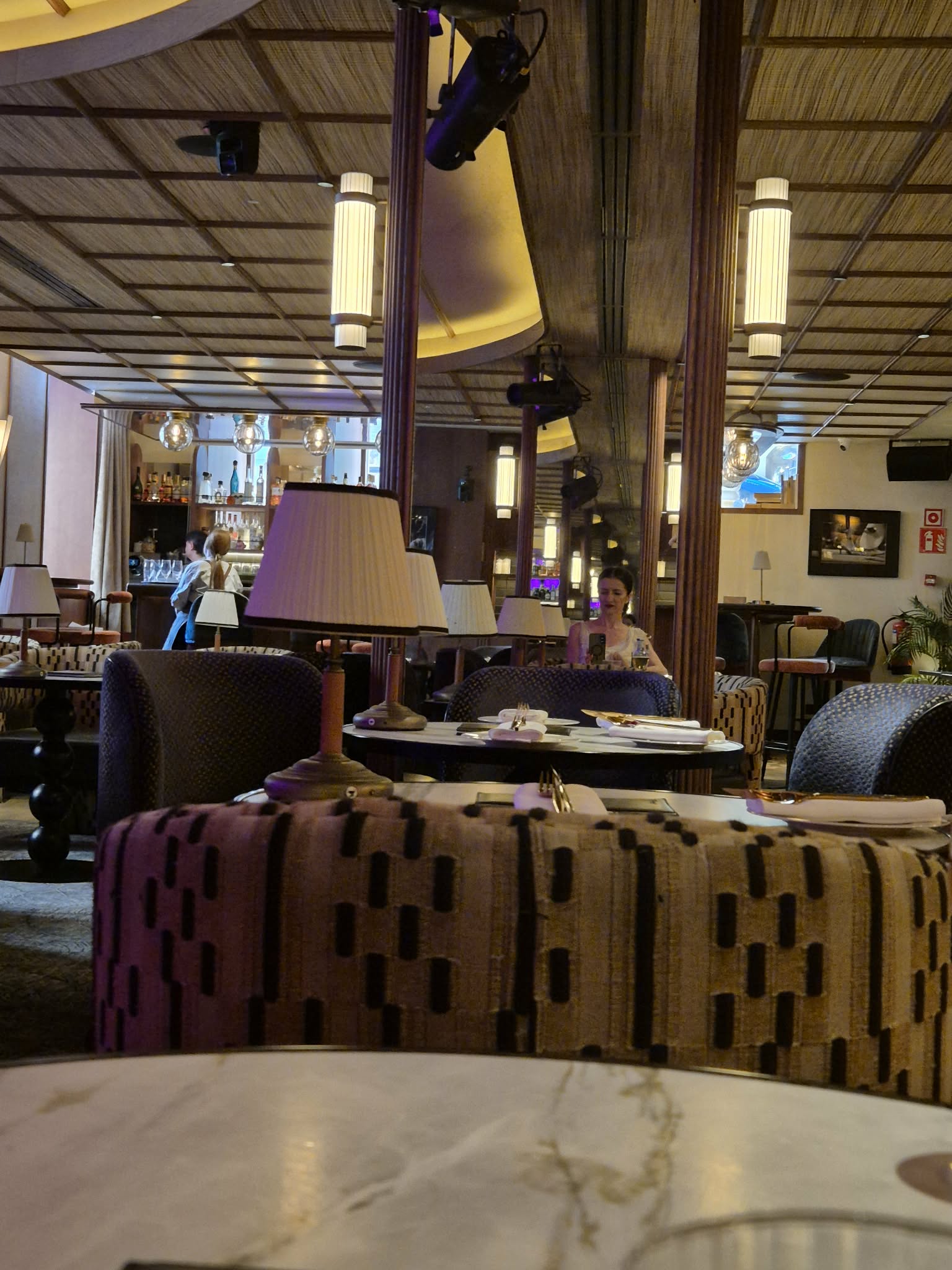
In the heart of Madrid, in a space that has made the closeness between musicians and audience part of its identity, Recoletos Jazz demonstrates that a club’s prestige is measured not only by the names on the bill, but also by the way each evening is shaped.
There are clubs that programme jazz, and there are clubs that know how to host it.
The difference does not necessarily lie in the size of the stage, the number of seats or the reputation of the artists. It lies instead in a series of almost invisible gestures: the right lighting, the distance between instrument and listener, the silence that settles before the first note, the attentiveness of the staff and the sense that the music does not have to compete with anything in order to be heard.
Recoletos Jazz Madrid belongs to the second category.
Located inside the AC Hotel Recoletos, on Calle de Recoletos, close to El Retiro Park and Madrid’s major boulevards, the club seems sheltered from the pace of the city outside. It does not assert itself through spectacle. It has to be discovered. That discretion is the first indication of its character.
Inside the room, the proximity between stage and audience changes the very nature of the concert. The musicians are not observed from the conventional distance of a concert hall. Their breathing, the fertile hesitation before a solo, the quick exchange of glances between players and the pleasure of a successful improvisation all become visible.
At Recoletos, jazz is not displayed. It happens.
The room is elegant without being ostentatious. The tables, armchairs, subdued lighting and stage create not so much a setting as a particular mode of attention. Nothing seems to demand the eye more than the musician. The audience remains close, but never intrudes. Service continues, yet the concert is never reduced to a mere accompaniment to dinner.
This distinction is essential. In many venues, live music becomes the sophisticated backdrop to a social evening. At Recoletos, the relationship is reversed: the entire night is arranged so that the music retains its centre of gravity.
The club has built its identity on intimacy, continuity and a programme open to different musical forms: classic and contemporary jazz, Latin and Afro-Cuban jazz, flamenco jazz, bossa nova, improvised music and evenings when the stage becomes the setting for unexpected encounters.
The first part of the night retains the discipline of a concert intended for attentive listening. Later, the atmosphere may open out into jam sessions and the kind of bohemian freedom without which jazz would lose part of its truth.
The two approaches do not contradict one another. Together, they express the two natures of this music: the discipline of listening and the adventure of the moment.
A true club, however, is not made up solely of a stage, a repertoire and good acoustics. It exists through the people who, night after night, make possible that rare impression that everything is unfolding naturally.
The audience sees the concert. Behind it lie the programming, the technical preparation, the welcoming of guests, the care given to the artists, the unobtrusive order of the room and the ability to resolve quietly everything that should never reach the stage.
This is one of the great qualities of Recoletos Jazz: its professionalism is not put on display, but transformed into atmosphere.
A good host does not occupy the centre of the evening. A good host makes it possible for that centre to belong to the musicians.
I had the privilege of being at Recoletos Jazz Madrid on the evenings of 15, 16 and 17 July 2026, together with my friends Carlos Sarduy Dimet, Cecilia Krull, Marco Poingt and Frank Durand, for three nights that became a genuine celebration of jazz.
Dany Noel and Reinier Elizarde, “El Negrón”, were also with us.
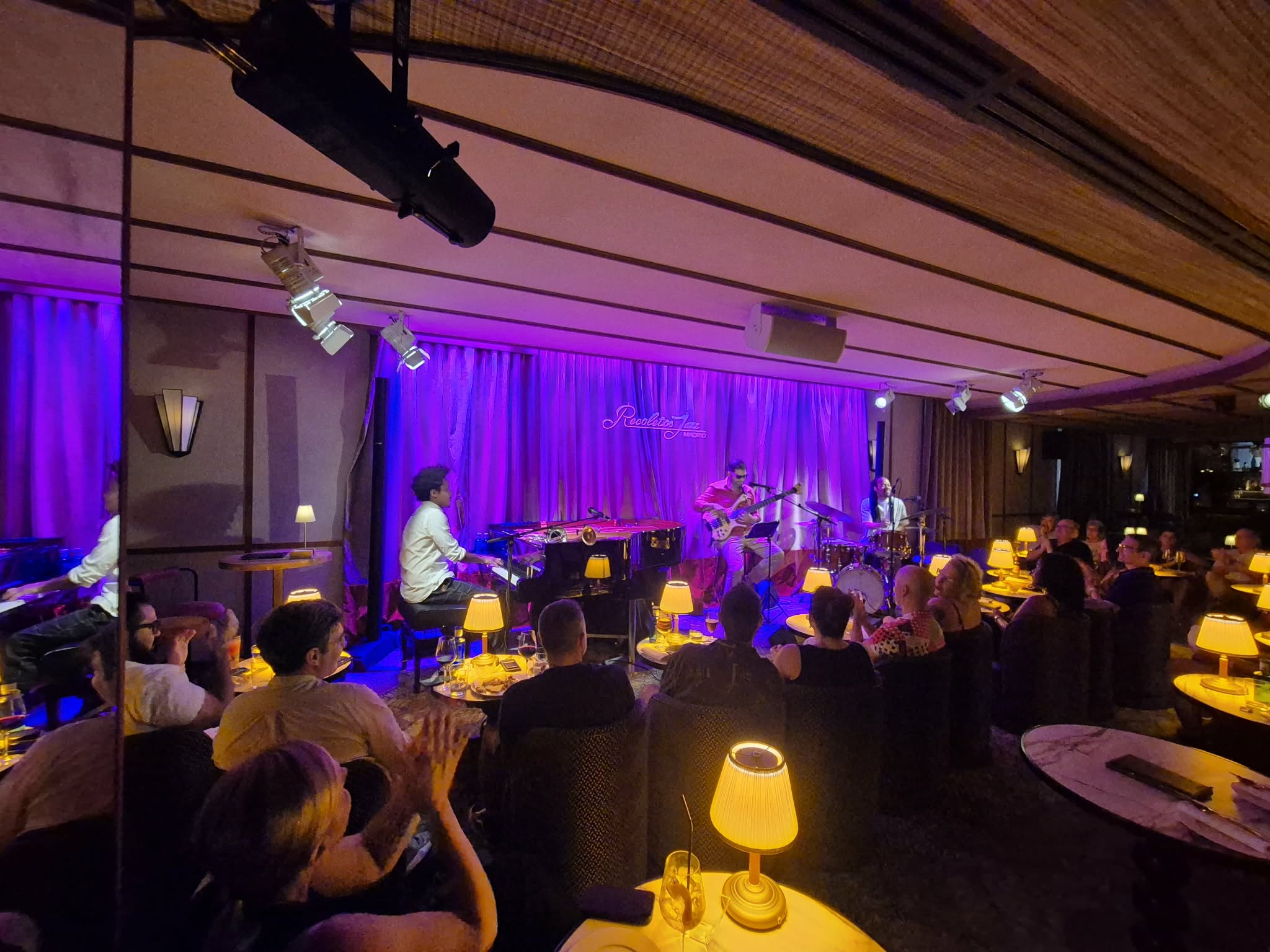
They were three different evenings, united by the same musical freedom and the same pleasure of coming together. Latin and Afro-Cuban jazz, the refinement of the piano, rhythmic power, voice and improvisation were not arranged as a predictable sequence of individual moments. Instead, they formed a living dialogue.
It was the kind of music in which virtuosity never became a display, and in which the friendship between the artists could be heard before it needed to be explained.
My special thanks go to Ms Verónica Mora, an extraordinary host whose attentiveness, elegance and generosity accompanied those evenings without ever disturbing their natural flow.
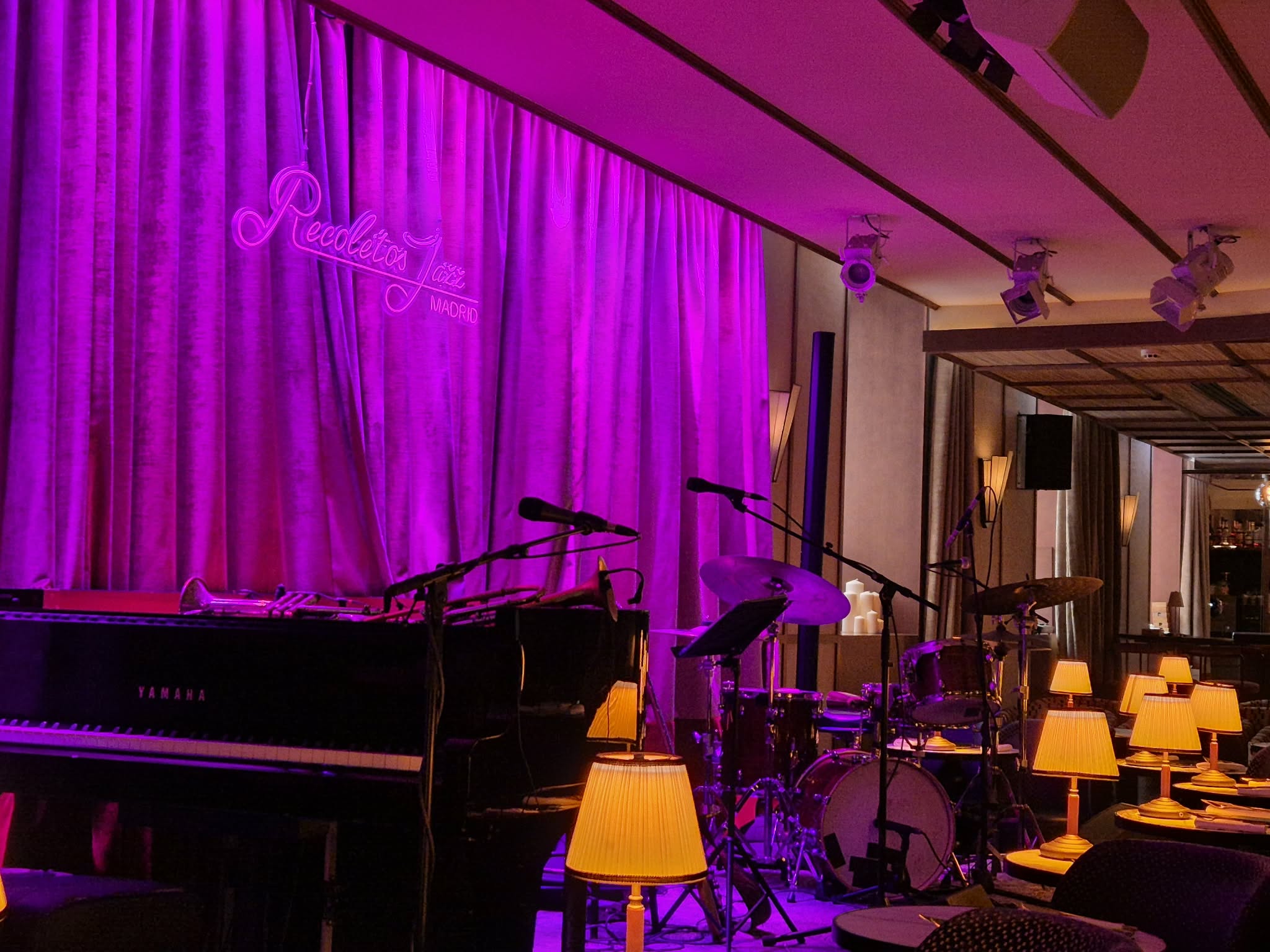
I would also like to thank the entire team who make it possible, night after night, for Recoletos to be more than a prestigious address or a stage with an outstanding programme.
An international-calibre club is not built solely by the artists whose names appear on the bill. It is also built by those who prepare the room before they arrive, welcome the audience, look after the musicians and understand that genuine hospitality is not an additional service, but part of the culture of the place.
Recoletos Jazz Madrid has become a landmark precisely because it understands this: jazz needs freedom, but that freedom becomes possible only within a space shaped by discipline, respect and intelligence.
And when all these elements come together, the audience does not simply leave a concert.
They leave carrying with them an evening that will never happen in quite the same way again.
Andrei Slăvuțeanu